NRI KYC Process For Mutual Fund Investing: A Complete Guide
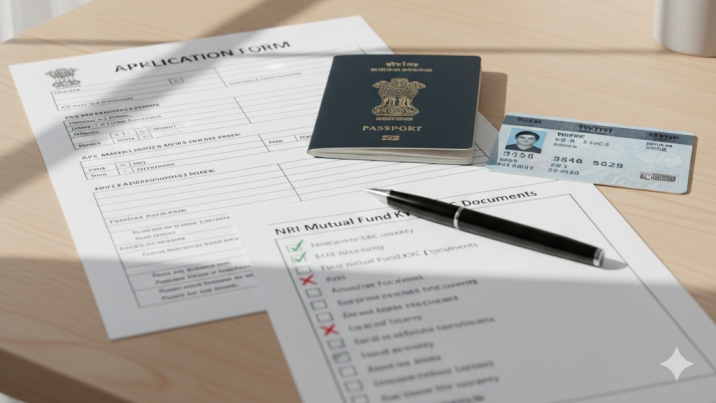
Before investing in Indian mutual funds, Non-Residents (NRIs and OCI card holders) must complete the Know Your Customer (KYC) process, as it’s a mandatory step under SEBI (Securities and Exchange Board of India) regulations that confirms your identity, address, residency and tax status. You can complete your NRI KYC online through CAMS or KFintech, or send notarized physical documents by courier. This guide breaks down every step — from document preparation to FATCA/CRS declarations — so you can invest confidently and avoid delays.
Key Takeaways
- NRIs must complete KYC before investing in any Indian mutual fund.
- Submit documents like passport, visa/OCI, PAN, and address proof via CAMS or KFintech.
- FATCA and CRS declarations are mandatory for tax compliance.
- KYC approval usually takes 7–10 business days.
- Keep your details updated to avoid blocked transactions or rejected investments.
What Is KYC and Why Do NRIs Need It?
KYC (Know Your Customer) is a verification process to confirm your identity and source of funds.
It’s not just a formality — it ensures your investments comply with SEBI, RBI, and FATCA/CRS norms.
Once your KYC is approved, you can invest in mutual funds, open folios, and redeem units across any Asset Management Company (AMC) — without redoing the paperwork.
What are the documents required for NRIs to get their mutual fund KYC done?
You’ll need four key documents for your NRI KYC submission:
| Document Type | Purpose | Accepted Proofs |
|---|---|---|
| Identity Proof | Confirms who you are | Passport (photo and address page) |
| PAN Card | Links your investment to India’s tax network | PAN card issued by NSDL or UTIITSL |
| Overseas Address Proof | Confirms your residence abroad | Utility bill, bank statement, or residence permit (issued within last 3 months) |
| Bank Account Proof | For linking NRE/NRO account | Cancelled cheque or bank statement (showing IFSC and account number) |
| Visa/OCI Card (if applicable) | Confirms residency type | Valid Indian visa, OCI, or PIO card |
📌 Tip: All documents must be self-attested and notarized or attested by the Indian Embassy if you’re submitting via courier.
Understanding FATCA and CRS Declarations for NRIs
Even after submitting your documents, your KYC is incomplete without FATCA and CRS declarations.
These ensure tax transparency between India and your country of residence.
What Are FATCA and CRS?
FATCA (Foreign Account Tax Compliance Act) and CRS (Common Reporting Standard) are international frameworks that help prevent tax evasion.
When you invest in Indian mutual funds as an NRI, these declarations inform the Indian authorities about your tax residency and allow regulated information sharing with your country of residence.
Put simply, FATCA applies mainly to U.S. citizens and residents, while CRS covers NRIs from all other countries. Both ensure transparency and compliance under global tax laws — so skipping them can lead to KYC rejection or investment restrictions later.
| Regulation | Full Form | Who It Applies To | Purpose | Information Collected |
|---|---|---|---|---|
| FATCA | Foreign Account Tax Compliance Act | NRIs who are U.S. citizens or U.S. tax residents | Reports U.S.-linked investments to the IRS via Indian authorities | U.S. citizenship, address, TIN, country of birth |
| CRS | Common Reporting Standard | NRIs from non-U.S. countries | Enables tax data exchange between India and 100+ countries | Country of tax residence, TIN, nationality, address |
Steps to Complete FATCA & CRS:
- Visit CAMS FATCA Form or KFintech FATCA Update.
- Enter your PAN and personal details.
- Provide your country of birth, tax residency, and TIN.
- Upload required documents (passport, PAN, overseas address proof).
- Submit electronically.
✅ Even if you’re not a U.S. resident, filling CRS is mandatory.
How NRIs Can Complete Their KYC for Mutual Fund Investing
NRIs (including OCI and PIO card holders) can easily get their ‘know your customer’ process done from abroad through a few practical methods. You can do it fully online through CAMS or KFintech, or you can send documents by courier if you prefer an offline option. Each method follows the same basic requirement: confirm your identity, overseas address, and PAN details. The steps are straightforward, and once your KYC is approved, you can start or continue investments in Indian mutual funds as a non-resident (NRI or OCI/PIO) without delays. Below we discuss each of these 3 methods in detail:
Online KYC Process via CAMS (Step-by-Step)
- Visit CAMS KYC Portal.
- Click “KYC Registration – NRI”.
- Upload scanned copies of your passport, PAN, address proof, and cancelled cheque.
- Complete FATCA/CRS declaration.
- Finish video verification or e-sign (as prompted).
- Track status on CVL KRA Portal.
⏱️ Processing Time: 7–10 working days.
📧 You’ll receive an email once your KYC is approved.
Online KYC Process via KFintech
- Go to KFintech KYC Portal.
- Select “NRI / Foreign Investor” under applicant type.
- Upload required documents (passport, PAN, overseas address proof, OCI/PIO card).
- Complete FATCA/CRS self-declaration.
- Attach passport-sized photo and cancelled cheque.
- Submit your form digitally.
⏱️ Approval Time: Around 7 business days.
💡 Keep your KYC number safe — you’ll need it for all future mutual fund applications.
Completing KYC by Courier (Offline Method)
If you prefer physical submission:
- Download the form from CAMS or KFintech.
- Fill and sign every page.
- Attach self-attested copies of:
- Passport (photo and address pages)
- PAN card
- Overseas address proof
- Visa/OCI copy (if applicable)
- Passport-size photograph
- Courier your form to the KRA’s registered address (preferably via DHL, FedEx, or Blue Dart).
Tracking is available on courier platforms. Verification usually completes within 7–15 business days.
Common Mistakes NRIs Make During KYC Submission
| Common Mistake | How to Avoid It |
|---|---|
| Missing signatures on pages | Sign every page of your form. |
| Unattested document copies | Self-attest and notarize if needed. |
| Address mismatch between proofs | Keep address consistent across all documents. |
| Expired passport or ID | Always use valid documents. |
| Skipping FATCA/CRS fields | Fill both sections completely. |
| Missing photograph | Attach a recent, clear photo. |
| Using Indian address | Use your current overseas address. |
📝 Quick Tip: Before sending, recheck your form for signatures, photos, FATCA info, and attestation.
KYC Verification Timeline and Tracking
| Mode | Estimated Processing Time | How to Track |
|---|---|---|
| Online (CAMS/KFintech) | 3–7 business days | CVL KRA / NDML |
| Courier Submission | 7–15 business days | Email or KRA helpline |
Your status will show as:
- Registered: KYC approved
- On Hold: Correction required
- Rejected: Incomplete or invalid documents
If pending beyond 15 days, contact CAMS/KFintech support.
What to Do After Successful KYC Completion
Once approved, you can start investing:
- Open a mutual fund account with your preferred AMC or online platform.
- Link your NRO/NRE bank account.
- Set up SIPs or lumpsum investments.
- Update KYC whenever your address, bank, or residency changes.
💡 SEBI mandates re-verification every 10 years, so keep your KYC current to avoid frozen accounts.
Frequently Asked Questions (FAQs)
1. Can NRIs invest in all mutual fund schemes after KYC?
No. NRIs from the U.S. and Canada face restrictions with some AMCs. Always check scheme eligibility before investing.
2. Is a separate KYC needed for each AMC?
No. Once completed, KYC is centrally registered and valid across all mutual fund houses.
3. Can I use my foreign address for KYC?
Yes, you can. Use your overseas address as primary and Indian address for correspondence (optional).
4. Does NRI KYC expire?
Yes. As per SEBI rules, periodic re-verification is required every 10 years.
5. How can I check my KYC status?
Visit CVL KRA, enter your PAN, and view your current KYC status instantly.
6. What happens if my KYC lapses?
Your investments remain safe, but new transactions are blocked until you update your KYC.
In Summary
Completing your NRI mutual fund KYC is your first step toward investing in India’s ₹47 trillion mutual fund market.
The process takes less than two weeks and unlocks seamless investment access from anywhere in the world.
So don’t delay — complete your KYC today through CAMS or KFintech and start participating in India’s growth story.